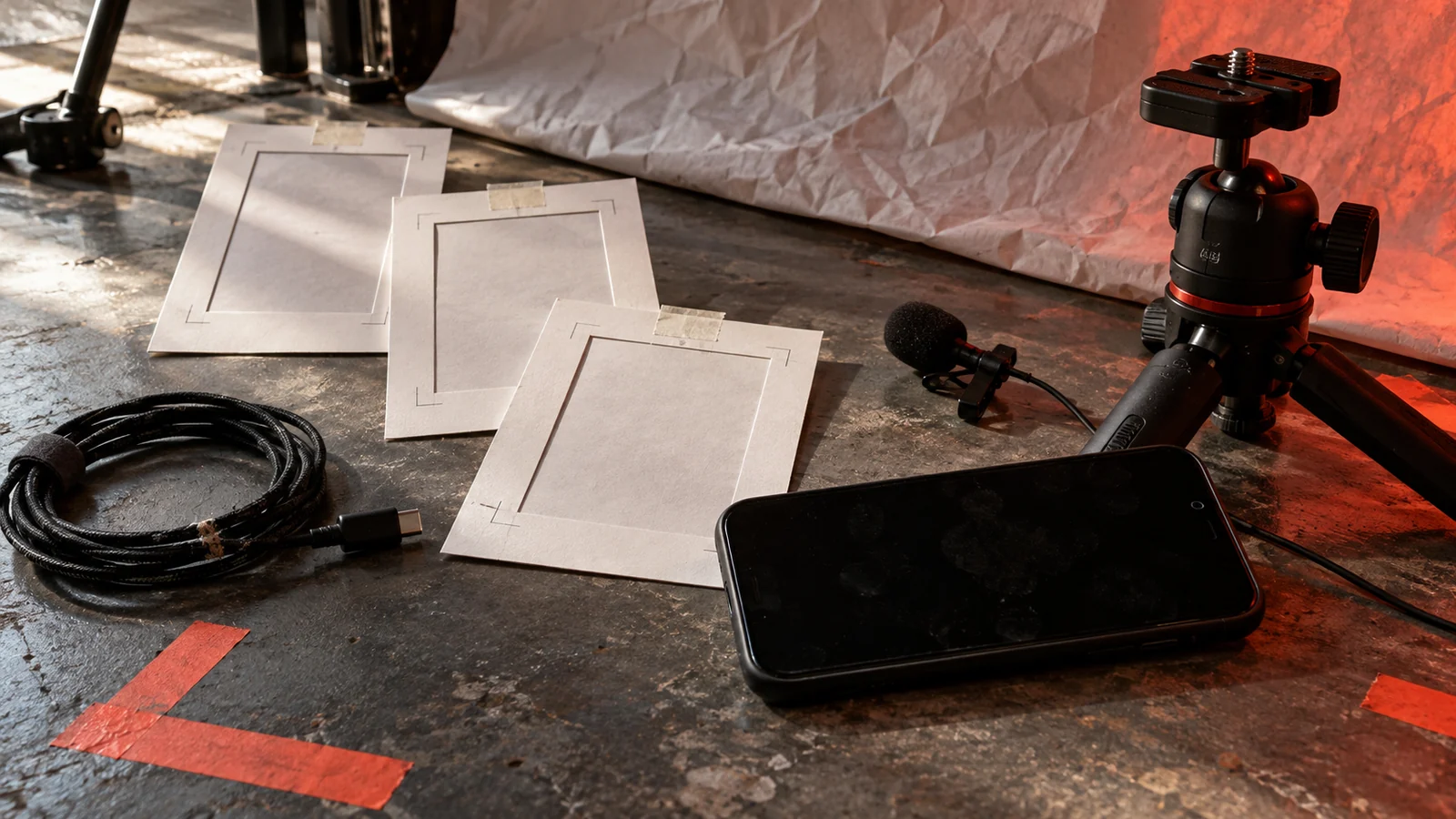
An effective Reel is a complete idea built for a small screen, not a long video with its first minute removed. The practical workflow is to define the viewer and outcome, make the opening legible without context, show evidence quickly, and check music and commercial disclosures before posting.
Instagram features, availability and music access can vary by account type, country and rollout. Confirm the controls visible in your account before promising a feature to a client. This guide focuses on decisions that remain useful when the interface changes.
Define the Reel before choosing a trend
Write a one-line brief:
A [specific viewer] will understand or do [one useful thing] because the Reel shows [proof].
For example: “A beginner product photographer will stop flattening small objects because the Reel compares front light with side light on the same setup.” The comparison supplies the story. A trending format may support it, but it is not the reason the video exists.
Choose one primary job: discovery, trust, conversion, retention or research. A discovery Reel should make sense to someone who has never seen your profile. A conversion Reel can assume more context, but its commercial relationship and next step must be clear.
Structure the first screen
The first screen has to work in motion, on mute and at phone size. Combine no more than three elements:
- a visible subject or result;
- a short text promise;
- speech or sound that adds rather than duplicates meaning.
Avoid a logo animation, greeting and topic announcement in sequence. Start with the useful tension: the mistake, contrast, result, question or surprising constraint. Then pay it off. A strong opening does not need exaggeration; it needs specificity.
Keep critical text away from interface controls and edges. Preview the exported file inside the actual Reels composer, because safe areas can change. Captions should remain readable against every shot; use contrast or a background treatment instead of assuming the footage will stay dark or uncluttered.
Build the middle around proof
A Reel becomes credible when the viewer can see how the conclusion was reached. Useful proof patterns include:
- Before and after: hold everything except one variable constant.
- Demonstration: show the action and the observable result.
- Three-step sequence: one verb and one visual for each step.
- Annotated example: point to the exact feature being discussed.
- Counterexample: show the tempting approach and why it fails.
Cut pauses that add no comprehension, but do not remove the moment the viewer needs to inspect the evidence. Pace is not the number of edits; it is how efficiently new meaning arrives.
Decide the call to action from the content job
Match the close to what the Reel accomplished. A technique demonstration can ask viewers to try one adjustment. A comparison can direct them to a detailed guide. A research Reel can ask a narrow question that produces useful responses.
Do not stack “like, comment, save, share and follow.” One relevant next step is easier to understand and measure. If a link or resource is mentioned, test the destination on mobile and preserve the wording used in the Reel so the viewer can recognize it.
Handle music and commercial use explicitly
Meta says music in Instagram's licensed music library is intended for personal, non-commercial use. Certain business accounts and post types may have restricted access. Where available, Meta points users without licensed-library access toward Sound Collection, whose tracks and sounds can be used commercially in Reels and Stories according to Meta's help documentation.
That distinction matters when a Reel promotes your own service, a sponsor or another commercial offer. Do not infer commercial permission merely because a track appears in an app. Record the library, track, date, account context and applicable usage terms. If a client needs paid amplification, reuse elsewhere or long-term usage, confirm those rights separately.
Keep an export with no platform music. It gives you a fallback if access changes and a clean base for other platforms. If you supply your own recording, composition or licensed production music, keep contracts and license evidence with the project.
Disclose relationships as part of the creative
Meta defines branded content as creator or publisher content influenced by a business partner in exchange for value, including some gifted products, and requires its paid-partnership label for branded content. Local advertising law may add requirements.
The disclosure should not be an afterthought hidden after editing. Reserve visible space, use the platform tool when required and make the relationship understandable in the content itself. Check whether the brand needs approval access and whether the agreement grants advertising or whitelisting rights. Those are separate business decisions from posting the Reel.
Use an efficient production checklist
Before recording:
- one viewer, one problem, one promised result;
- proof shot identified;
- required product, screen or location available;
- rights source selected;
- disclosure need decided;
- clean-master requirement noted.
During editing:
- the first frame is understandable;
- every cut adds meaning;
- speech remains intelligible under music;
- captions are accurate and readable;
- important text survives the interface overlay;
- the conclusion resolves the opening;
- the final frame lasts long enough to read.
Before posting:
- preview in the Reels composer;
- recheck account-specific music permission;
- apply required partnership tools and wording;
- test mentions and destinations;
- save the master, caption and rights record;
- note the intended metric and review date.
Review Reels by purpose, not vanity
Group comparable Reels by content lane and job. For discovery, inspect whether the opening attracted the intended audience and whether viewing continued. For trust, look for saves, meaningful replies and profile exploration. For conversion, measure the qualified next action rather than total plays.
Write a short postmortem:
- What did we expect the opening to communicate?
- Where did the evidence become clear?
- Which comments revealed confusion or a new need?
- Did the response match the intended audience?
- What single variable should change next time?
Do not rebuild the strategy around one spike. Repeat useful premises with controlled changes. A winning Reel may indicate a strong problem, a strong proof pattern, a recognizable presenter or temporary distribution. Only repetition separates those explanations.
The practical Reels system is therefore: audience problem, legible opening, visible proof, one next step, verified rights, clear disclosure and a scheduled review. Trends can accelerate that system, but they should never be asked to replace it.